

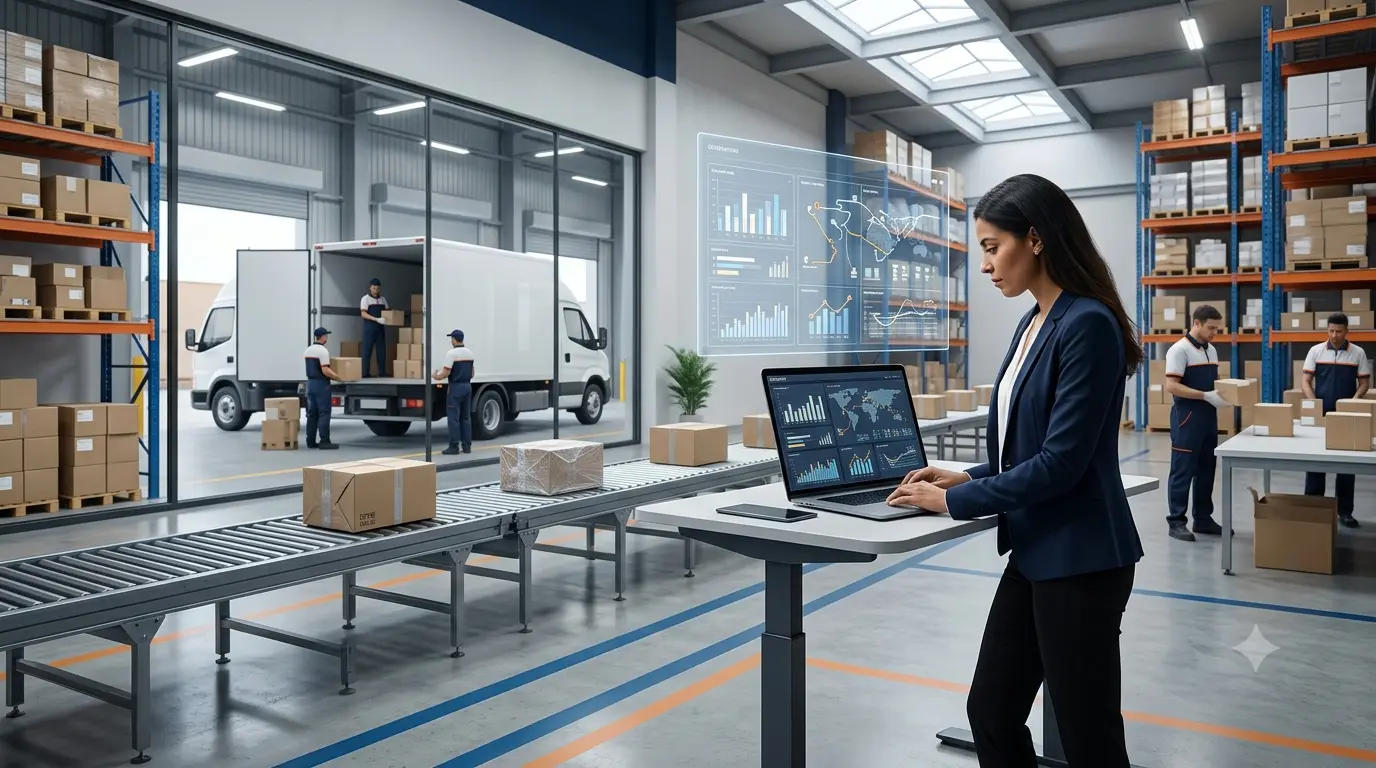
Online shopping has changed customer expectations around product availability, order accuracy, delivery speed, and returns. Customers can purchase products from anywhere, but fulfilling each order involves several connected activities behind the scenes. Supply chain management brings these activities together by coordinating suppliers, inventory, warehouses, order processing, transportation, and final delivery.
For e-commerce companies, a well-planned supply chain supports product availability, controls operating expenses, and maintains customer satisfaction. As online orders increase and customers expect quicker deliveries, managing these operations becomes an important part of business planning.
Every online purchase involves a series of activities that begin before a customer places an order. Supply chain management in e-commerce refers to coordinating the movement of products, information, and resources from suppliers to the final customer.
It connects different business functions, including procurement, inventory management, warehousing, packaging, transportation, and product delivery.
An organised supply chain ensures that products are available when customers place orders and reach the correct destinations within the promised delivery period.
The main activities include:
Each activity contributes to the movement of products across the supply chain. Delays or errors at one stage can affect the remaining operations.

Once a customer places an order, logistics operations take responsibility for moving the product from storage to the delivery location. E-commerce logistics covers product storage, handling, transportation, shipment tracking, and returns.
These operations connect online order placement with physical product delivery.
A warehouse is more than a storage facility. It serves as a central point for receiving, organising, tracking, and dispatching products.
Proper warehouse management involves arranging products based on demand, maintaining accurate stock records, and reducing the time required to locate items. Warehouse Management Systems (WMS) can also support stock monitoring and order preparation.
The order fulfilment process starts when a customer completes an online purchase. The order is verified, the product is located, and the item is picked, packed, labelled, and prepared for dispatch.
Accurate order processing reduces incorrect shipments, packing errors, and delays. Clear coordination between inventory and fulfilment teams also prevents orders from being accepted for unavailable products.
Transportation connects warehouses, distribution centres, and customer locations. It involves selecting suitable delivery partners, planning routes, scheduling shipments, and monitoring transportation expenses.
The choice of transportation mode depends on product type, delivery distance, shipment size, and customer expectations.
Not every delivered product remains with the customer. Damaged items, incorrect orders, size issues, and changing purchase decisions can result in product returns.
Reverse logistics manages the movement of returned products from customers back to sellers or designated facilities. The process may include collection, quality inspection, replacement, refunds, repairs, and restocking.
A clear return process also gives customers better visibility into what happens after they request a return.
Supply chain decisions influence several aspects of online retail, from stock availability to the final customer experience. The following areas explain why supply chain management is important for e-commerce operations.
Accurate stock information allows online retailers to monitor available products and identify when replenishment is required. It also reduces the risk of accepting orders for products that are out of stock.
Inventory planning helps maintain a suitable balance between product availability and storage expenses. Businesses can use sales history and demand patterns to decide how much stock to maintain.
Customers often compare online sellers based on delivery timelines. A coordinated supply chain connects warehouse operations, transportation providers, and delivery teams to reduce delays.
Locating inventory closer to customer demand areas and selecting suitable delivery routes can also shorten delivery times.
Storage, packaging, transportation, and inventory expenses contribute to the overall cost of fulfilling an online order.
Supply chain planning helps identify unnecessary storage, repeated product handling, poor route selection, and excess inventory. Addressing these issues can reduce avoidable operating expenses.
Customers expect to receive the correct product in good condition within the promised delivery period. They also expect clear updates about shipment status and a straightforward returns process.
Accurate inventory records, careful packaging, and timely communication contribute to a better purchasing experience. Consistent service can encourage repeat purchases and strengthen customer relationships.
An e-commerce company may initially serve a limited geographical area before expanding into new markets. As order volumes increase, its warehouse capacity, supplier network, transportation requirements, and inventory systems must also adapt.
A scalable supply chain provides the operational structure needed to manage higher order volumes and serve customers across additional locations.
Managing orders across multiple locations and sales channels requires accurate and timely information. Digital systems provide visibility into inventory, shipments, warehouse activities, and operational performance.
Some commonly used technologies include:
For example, demand forecasting tools can identify products that may experience higher demand during seasonal sales. Retailers can use these insights to plan stock purchases and warehouse capacity in advance.
Technology therefore plays an important role in improving supply chain visibility and supporting operational decisions.
Online retailers face several challenges while managing products, orders, suppliers, and delivery networks. These issues can affect operating costs and customer service.
Festive seasons, discount campaigns, changing customer preferences, and market trends can cause sudden changes in order volumes.
Without suitable demand forecasting, retailers may experience stock shortages during busy periods or maintain excess inventory when demand decreases.
Managing products across multiple warehouses and online sales channels can create differences between recorded and actual stock levels.
Poor inventory visibility may result in cancelled orders, unavailable products, and unnecessary replenishment expenses.
The final stage of delivery often involves several location-specific factors, including traffic, road conditions, delivery availability, and customer accessibility.
These factors can increase transportation expenses and affect promised delivery schedules, particularly in areas with limited delivery infrastructure.
Supplier delays, transportation interruptions, natural disasters, and unexpected market conditions can affect product movement.
Supply chain risk management involves identifying possible disruptions, evaluating their impact, and preparing alternatives such as backup suppliers and different transportation arrangements.
Frequent product returns increase transportation, inspection, replacement, and restocking expenses.
Incorrect product descriptions, damaged packaging, and unsuitable product selections may also contribute to return volumes. Clear product information and organised reverse logistics can reduce avoidable returns and manage necessary ones.
Improving supply chain performance requires coordination across purchasing, inventory, warehouse, and logistics operations. The following practices can support better planning and control.
Retailers should also review operational performance regularly. Tracking order accuracy, fulfilment time, inventory turnover, and return rates can reveal areas that need improvement.
Technology, changing customer expectations, and sustainability requirements are influencing the next stage of e-commerce logistics. Several developments are shaping how online retailers plan their operations.
In India, logistics infrastructure and digital integration are also receiving attention through government initiatives such as the National Logistics Policy. The Ministry of Commerce and Industry discusses measures for improving urban freight movement, including first-mile and last-mile logistics.
These developments are expected to influence inventory planning, distribution networks, and delivery operations as e-commerce continues to grow.
Supply chain management is an important area of study for students interested in logistics, procurement, inventory planning, transportation, and business operations. An MBA specialization in Logistics and Supply Chain Management introduces students to the processes involved in managing product movement, supplier relationships, warehouse operations, and distribution networks.
At Hallmark Business School, students can choose from different functional and sectoral MBA specializations based on their academic interests and career goals. Logistics and Supply Chain Management is one of the sectoral specializations offered at the institution.
Supply chain management connects procurement, inventory, warehousing, order fulfilment, transportation, and product delivery within e-commerce operations. Each stage influences product availability, delivery timelines, operating expenses, and customer satisfaction.
As online retail expands, organisations need professionals who understand logistics planning, inventory control, supplier coordination, and digital supply chain systems. Students interested in these areas can explore the MBA in Logistics and Supply Chain Management at Hallmark Business School, which covers subjects such as supply chain planning, sourcing, warehouse management, transportation, and distribution.